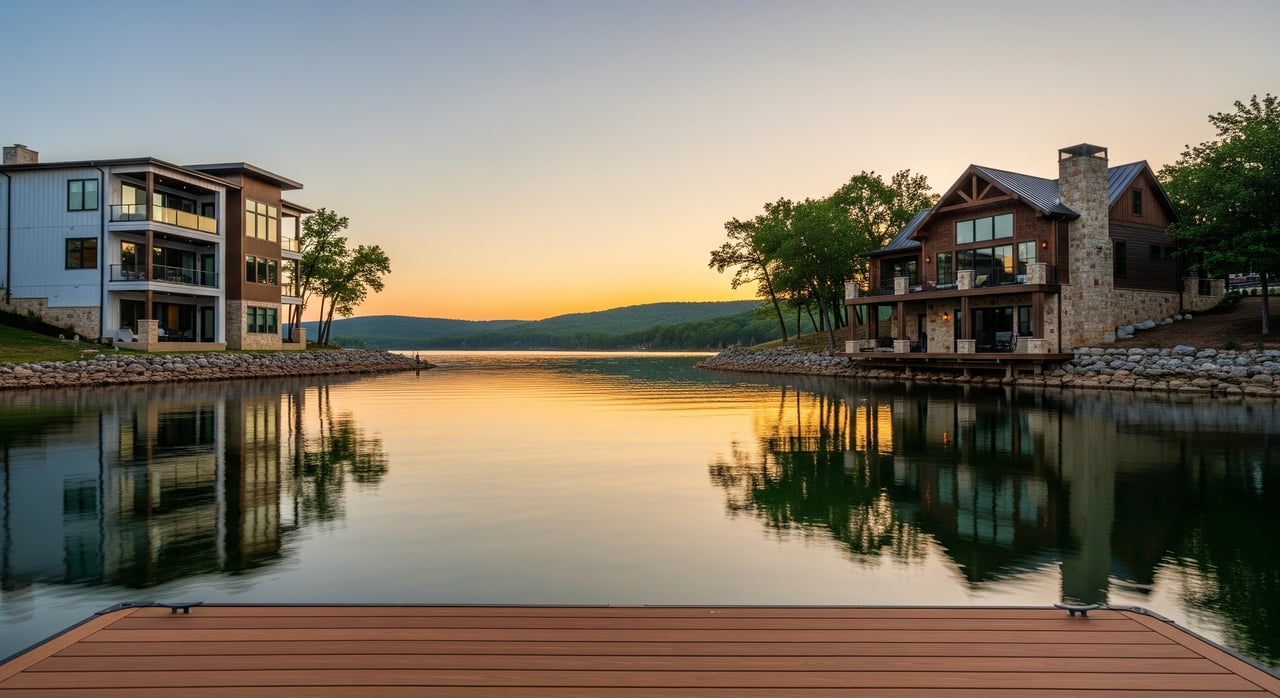
Thinking about spending your weekends on Table Rock Lake but not sure whether a condo or a cabin on Indian Point fits you best? You’re not alone. Buyers here weigh the tradeoffs between HOA coverage, short-term rental rules, boat access, financing, and long-term resale. In this guide, you’ll get a clear, side-by-side look at how condos and standalone cabins stack up so you can choose confidently. Let’s dive in.
Quick take: Condo vs. cabin at a glance
- Choose a condo if you want low maintenance and predictable costs. HOAs often handle exterior upkeep, landscaping, and shared amenities, which is ideal if you visit occasionally or prefer lock-and-leave convenience.
- Choose a cabin if you want privacy, control, and flexibility. You handle all maintenance and have more say over upgrades, schedule, and aesthetics. It can be a stronger fit for full-time living or hands-on investors.
- Short-term rentals: Either can work if rules allow. Confirm HOA rental language, county requirements, and tax obligations before you buy.
- Boat access: Dock ownership, assigned slips, and storage rules vary by community and lot. Always verify what is included and what is allowed.
HOA dynamics and governance
HOA structure is one of the biggest differences between condos and cabins on Indian Point.
Condos: what to confirm
- Scope of coverage: Ask what the HOA maintains. Common items include roof and exterior, landscaping, docks or shoreline areas, trash, snow removal, pest control, common-area insurance, utilities for shared spaces, and on-site amenities like pools or clubhouses.
- Fees and history: Review current dues, how often they change, and whether fees increase seasonally.
- Reserves and assessments: Look for a formal reserve study, current reserve balance, and any planned or recent special assessments.
- Rules that affect use: Occupancy limits, guest parking, noise, dock rules, smoking/pets, and especially short-term rental restrictions or registration.
- Governance quality: Frequency of board meetings, transparency of minutes and financials, vendor contracts, and consistency of rule enforcement.
- Transfer or rental fees: Some HOAs charge transfer fees, STR registration fees, or pass-through charges.
Documents to request:
- CC&Rs, bylaws, and rules and regulations
- Latest budget, balance sheet, profit and loss, and reserve study
- Board meeting minutes for the last 12–24 months
- Master insurance certificate and what your personal policy must cover (walls-in vs. all-inclusive)
- Any pending litigation or special assessment notices
Cabins: what to confirm
- HOA vs. no HOA: Some cabins sit in a POA or HOA with limited services; others are fully independent. Verify if any association rules apply (especially rental and dock rules).
- Services: If no HOA coverage applies, you’ll handle roof, exterior, septic or sewer, driveway and yard maintenance, dock upkeep, and pest control directly.
- Costs and control: You get full control over vendors and timing, but your costs will be more variable.
Maintenance and ongoing costs
Condos
- Typical responsibilities: The HOA often handles exterior structural items, shared systems, landscaping, and common docks. You handle interior maintenance and contents.
- Pros: Lower day-to-day workload, handy for absentee owners and weekenders.
- Cons: Less control over vendor quality or timing, and the risk of special assessments if reserves fall short.
Cabins
- Typical responsibilities: Roof, siding, decks, septic/sewer, dock (if private), driveway, yard, HVAC, and more.
- Local must-do items: Septic inspection and pump schedule, dock maintenance, erosion control, roof/soffit/paint in humid and windy conditions, tree cleanup, and winterizing plumbing and HVAC if used seasonally.
- Pros: Full control, privacy, room to personalize, and potential land value upside.
- Cons: More time and cost variability, especially for seasonal and storm-related tasks.
Tips to manage costs:
- Request three years of maintenance records and vendor invoices for cabins.
- For condos, review vendor contracts for landscaping, dock maintenance, and community management.
- Budget for seasonal winterization and local storm repairs; consider a local caretaker or property manager if you will be absent.
Short-term rentals: what to verify
Short-term rental viability depends on rules, demand, and operations. Before you buy:
- Local regulations: Check Stone County planning and zoning, any township rules, and municipal codes if near city boundaries. Requirements may include licensing, special use permits, occupancy limits, safety inspections, and tax collection.
- HOA rules: Many condo associations regulate or prohibit STRs. If STRs are allowed, there may be minimum stays, registration steps, guest policies, and extra fees.
- Taxes: Expect transient lodging taxes at the state and possibly county or tourism district level. Owners must register, collect, and remit.
- Market demand: Occupancy patterns in the Branson/Table Rock market are seasonal. Research comparable listings and consult local property managers for occupancy and average daily rates.
- Operations: STRs require reliable cleaning, linens, maintenance, guest communication, and management. Full-service management often ranges higher in cost than long-term rentals, and utilities and wear-and-tear increase.
Practical cautions:
- Rules and ordinances can change. Review current county text, HOA vote history, and any proposed amendments.
- Insurance can be higher for STR use and may require a specific endorsement or different policy type.
Boat access, storage, and waterfront logistics
Table Rock Lake is a federal reservoir, and shoreline rules matter.
- Dock status: Confirm if the dock is deeded to the lot, leased, or part of a community facility. If community-based, ask how slips are allocated and what fees apply.
- Launch and storage: Verify on-site trailer parking, boat storage, and proximity to public launch ramps. Many communities restrict trailer parking in shared areas.
- Shoreline regulations: The U.S. Army Corps of Engineers regulates shoreline modifications and dock permits on Table Rock Lake. Confirm what is permitted before planning improvements.
- Access logistics: Evaluate stairs to water, driveway grade, winter accessibility, and lighting.
Documents to request:
- Recorded plat, dock agreements, and slip lease or assignment documents
- Any applicable permits from county agencies or the Corps of Engineers
- Site plan showing setbacks, easements, and impervious coverage if you plan additions
Financing and insurance differences
Financing
- Condos: Some lenders require condo community approval, adequate reserves, certain owner-occupancy ratios, and a master insurance policy. FHA or VA loans may require that the condo project be approved.
- Cabins: Usually financed like single-family homes, though waterfront locations can receive higher underwriting scrutiny and may require different terms.
- Investment use: If the primary purpose is rental income, expect larger down payments or different loan products.
Insurance
- Condos: You typically carry an HO-6 policy for interior improvements and contents; the HOA’s master policy covers common areas and exteriors. Clarify whether the master policy is walls-in or all-inclusive, and how deductibles are allocated.
- Cabins: You’ll need an HO-3 or similar policy for the entire structure and contents. Lakeside locations may have higher wind or hail premiums, and flood insurance can be required depending on FEMA mapping.
- STR use: Short-term rentals often need endorsements or commercial policies with higher liability limits. Dock and boat coverage are separate and should be reviewed with an insurer familiar with waterfront properties.
Resale outlook and buyer pools
- Condos: Appeal to buyers who want low maintenance, amenities, and predictable costs. Resale can depend heavily on the HOA’s reputation, fees, and rental policy.
- Cabins: Attract buyers seeking privacy, land control, and personalization. STR history, if allowed, can increase appeal for investors.
- Market seasonality: Resort submarkets like Indian Point can be seasonal. Time on market usually stretches in off-season months.
Factors that can hurt resale for either type:
- Restrictive rental rules that limit buyer interest
- Deferred maintenance, weak reserves, or pending litigation
- Poor access, erosion issues, or flood concerns
- Oversupply of similar STR units competing for the same guests
Which fits your profile?
- Weekend or second-home use: A condo is often ideal for lock-and-leave simplicity. A cabin works if you want privacy and plan to hire local services.
- Seasonal or snowbird living: Condos reduce absentee risks through on-site management. Cabins need a caretaker and a clear winterization plan.
- Full-time residents: Cabins often feel more like a traditional home with space and land. Condos suit those who prioritize amenities and lower maintenance.
- STR investors: Condos can perform well if STRs are allowed and amenities drive bookings. Cabins can command higher rates for private waterfront appeal but require more hands-on management.
- Investors who want fewer headaches: Condos are simpler to outsource, but HOA fees and rules affect margins. Cabins trade higher effort for more control and potential upside.
What to request before you write an offer
- CC&Rs, bylaws, rules and regulations, rental policy, and recent amendments
- Current HOA budget, reserve study, financial statements, and board minutes (12–24 months)
- Recorded plat, deed, survey with easements and any riparian description
- Dock deed or lease, slip assignment, or community dock agreement
- Insurance policies: HOA master policy for condos; prior owner’s homeowner and flood policies for cabins
- Rental income records, occupancy calendars, and tax remittance records if marketed as an STR
- Septic inspection, well test if applicable, and recent utility bills
- State and local disclosures, known violations, and any pending litigation
- Title commitment and property tax history
Smart next steps on Indian Point
- Speak with Stone County Planning and Zoning about STR rules, septic setbacks, and accessory structures.
- Verify shoreline and dock permits with the U.S. Army Corps of Engineers for Table Rock Lake.
- Consult local property managers for STR pro formas, occupancy expectations, and management quotes.
- Get insurance quotes from agents experienced with waterfront and STR coverage.
- Work with a local title company to review riparian deed language and easements.
- Walk the property to check dock condition, water depth, road access, internet reliability, and signs of storm or moisture issues.
If you want help narrowing to the right communities, reviewing HOA packets, or modeling STR performance with local context, we’re here to guide you. Reach out to The Home Team for a tailored plan and on-the-dock expertise.
FAQs
Can I legally run an Airbnb on Indian Point?
- Verify both the property’s HOA rules and Stone County or nearby municipal STR ordinances, plus any tax registration and safety requirements, before you buy.
What do Indian Point condo HOAs usually cover?
- Coverage varies widely; review the CC&Rs and budget. Many HOAs handle exterior maintenance, landscaping, common docks or shoreline, and shared amenities.
Will my purchase include a boat slip on Table Rock Lake?
- Not always. Confirm deeded docks, assigned slips, community allocation rules, and any dock lease documents, plus parking and trailer storage policies.
Is financing harder for a condo or a cabin?
- Condos may require project approval and specific ratios. Waterfront cabins can face tighter underwriting and higher insurance. Get prequalified and verify requirements early.
Which has better resale on Indian Point: condo or cabin?
- It depends on HOA quality, rental allowances, upkeep, and demand. Review local comps, time-on-market trends, and STR history if relevant.
How should I budget for maintenance on the lake?
- Request three years of maintenance records, then plan for septic service, dock upkeep, roof/exterior care, and winterization. Consider a caretaker if you will be absent.